



|
all of me
But what are we to do
when we no longer have that last piece? What do we do with a puzzle
that can never again reach that wholeness? (Who would want us to
pass it on to him or her?) Sure, we can still put the puzzle together
until that last piece, but something is always going to be
missing, a feeling of incompleteness, of perhaps emptiness, remains.
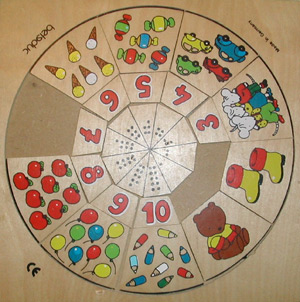
Sometimes the history of a particular toy is lost well before it even gets to us. A wooden puzzle for learning the numbers (that Hila seemed to enjoy though I could never figure out what attracted her to it) arrived by us already missing a piece. From the start it was a strange puzzle - the picture pieces were each the same size, as were the numerals, meaning that it was possible to put the puzzle together without getting the numbers right. Maybe that was the reason the kids seemed to enjoy playing with it. Now that it's ready to be passed on to someone else it seems to be in need of a couple of other pieces which have become misplaced. |
|||


To: A Digitized Life - main page