The world is full of initiation rites, with each culture having its own special way of taking note of the fact that children are suddenly reaching adulthood.
The initiation rites of so-called "modern" societies tend to pale in comparison to those of more traditional societies, and that's probably a pity. I admit that wearing a suit and tie for my own Bar Mitzvah just couldn't compare to wearing a mask. Though of course I didn't really realize that at the time.
Other possibilities:
Crossing over: Masks of Initiation Rites
But what about Avigail?
We all wish her well not only on this special occasion, but also as she makes this important passage. True, often ba'al or ba'alat hasimkha isn't fully aware of the significance of the event, but we trust that she's already becoming aware of the precarious balance between freedom and responsibility.
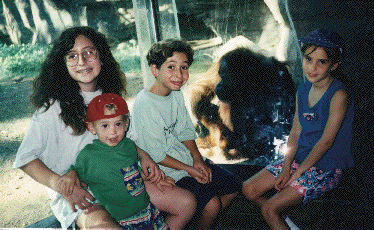
That's a family portrait, though the youngest and oldest cousins are missing. Another, only distinctly related family member, probably with distinct rites of passage of his/her own is also in the picture. If we can't all be together on this special occasion, then at least we can be together in a photograph.
And what about Avigail's Torah portion?
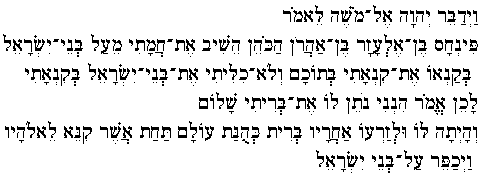
Parashat Pinchas has special historical meaning for me. It was on this parasha that an old friend "invaded" a Los Angeles synagogue, with me in tow, intending, for some reason which I probably thought I understood back then, to awaken American Jewry to the emptiness of its ways. I was certainly older then than Avigail is now, but I guess that this was for me a rite of passage in its own right.
But this parasha raises additional questions. Pinchas's act is an act of fanatacism, cloaked in that favorite garb of all fanatics - God's will. But in this story, it seems that God actually approves.
At a younger age I would have loudly and clearly approved as well: extremism in the pursuit of the absolute right was certainly justifiable. What rites of passage have I undergone since then that make me think so differently today?
But be that as it may,
back to A Note on Sibling Rivalry